


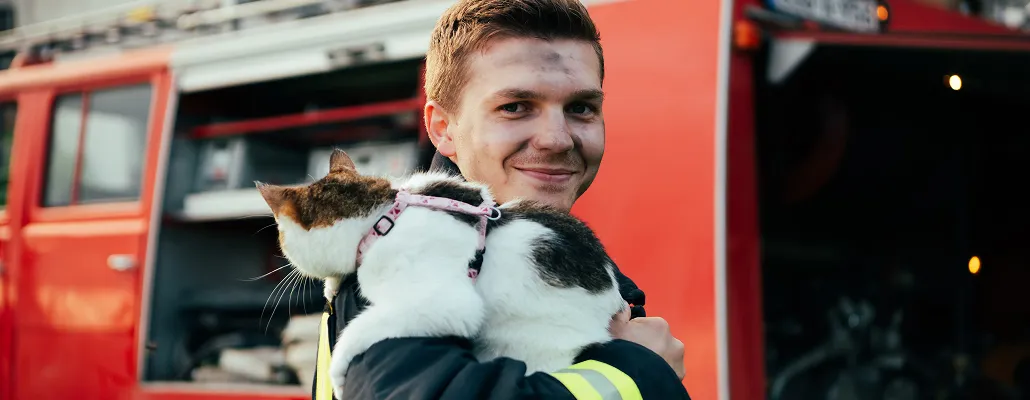
Many people who have pets understand that they quickly become part of the family. Unfortunately, many people don’t understand the importance of fire pet safety. It is often assumed that pets will simply follow us out the door in an emergency, but this is rarely true.
When frightened, pets are far more likely to retreat to a familiar “safe place” within the home rather than flee through an open door or window. Because of this instinct, firefighters often find pets inside burned homes, hiding where they feel safest. Proper preparation can help ensure this does not happen to your pets.
1. Use a Pet Sticker on Your Home
Veterinary offices and fire departments often provide “Save My Pet” stickers for homes with animals. These stickers allow you to list the number of pets, type of pet, and even their names.
Many pets perish in fires simply because firefighters are unaware they exist. If a fire occurs while you are away, these stickers alert first responders to search for your pets. It’s also helpful to note your pet’s usual safe place so firefighters know where to look.
If there isn’t enough room on one sticker, add additional stickers. Most veterinary offices can provide multiple stickers as needed.
2. Learn How to Pet-Proof Your Home
Just as children need a safe environment, so do pets.
- Always extinguish open flames before leaving the house. Pets can easily knock over candles.
- Train your pet to sleep in a designated area, such as a pet bed, so they can be located quickly.
- Observe where your pet hides when frightened—this is their “safe place.”
- Practice fire drills that include your pets.
- Assign a specific person to retrieve each pet during an emergency.
- Practice at least once a month to keep the plan familiar.
Whenever possible, keep your pet’s sleeping area close to their safe place to minimize searching during an emergency.
3. Treat Smoke Alarms Differently Around Pets
Smoke alarms should have batteries changed twice a year and be tested monthly. However, for pets, smoke alarms represent a source of fear.
Animals do not understand the alarm’s purpose and will likely flee to their safe place when it sounds. Be prepared to look for your pet first in their bed and then in their safe spot. Keeping these areas close together can save precious time during an emergency.
4. Inquire About Pet Oxygen Masks
Smoke inhalation and carbon monoxide poisoning are just as deadly to pets as they are to humans. As a result, many emergency responders now carry pet-specific oxygen masks designed to fit an animal’s muzzle.
Ask your local fire department or emergency responders if they carry pet oxygen masks. If not, consider advocating or fundraising for this equipment. You may also choose to keep pet oxygen equipment near your home’s escape route to grab during an emergency.
Providing supplemental oxygen can significantly improve a pet’s chances of survival.
5. Understand Your Pet’s Behavior
Knowing your pet’s personality is crucial in an emergency. Pets operate on instinct, and even if safely outside, they may attempt to run back into the home to reach their safe place.
For example, a pet that hides in the bathtub during thunderstorms may instinctively try to return to that spot during a fire. Hold your pet securely once outside to prevent this dangerous behavior.
Pets can sense fear and anxiety in their owners. Staying calm, reassuring your pet, and understanding their instincts will help keep both of you safer during a fire.
Fire safety planning that includes your pets can make the difference between life and death. Preparation, awareness, and practice are key to protecting every member of your family—pets included.


