


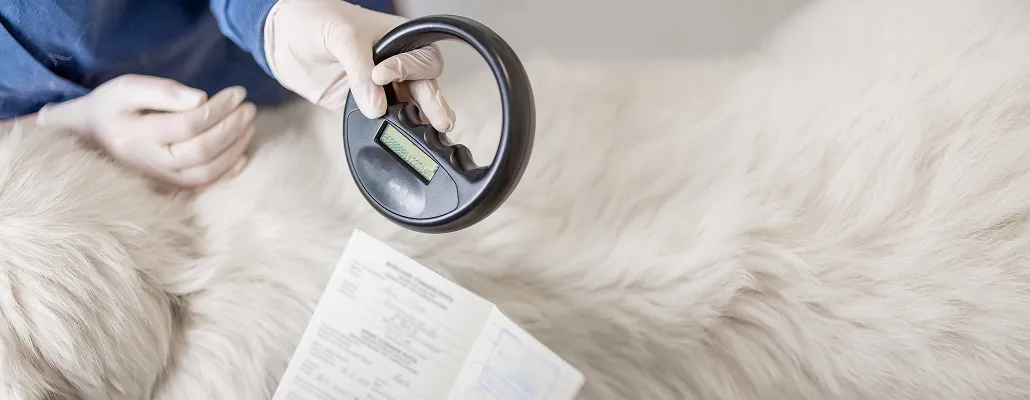
Pets love the outdoors, and in places where wilderness out-stretches civilization, pets can easily get lost. That’s why getting them a microchip is an important part of pet protection.
A Microchip Is Safe and Painless
Many pet owners fear the implant injection will hurt their animal. However, the injection type and needle size put the experience in the same category as vaccinations. The microchip comes in a sterile syringe and is injected between the shoulder blades. The injection takes only several seconds, and the experience for the pet will be no different than receiving a vaccination shot.
Microchips are not global positioning (GPS) enabled. They are radio-frequency identification (RFID) implants that provide identification and medical information about your pet. While they won’t help find a pet using Google Maps, they greatly improve the chances of a lost pet getting home safely once found.
Microchips never wear out. They do not require batteries and have no moving parts. The RFID chip remains dormant until activated by a scanner that reads the chip’s information.
Collars and Tags Are Still Important
An RFID microchip is not a replacement for collars and tags. Tags can be read by anyone, while a microchip requires a scanner. If a pet wanders up to someone, tags provide immediate access to the pet’s name, owner, and important medical information—such as dietary restrictions—before the pet ever reaches a shelter or veterinarian.
That said, tags can deteriorate and collars can fall off. In wilderness-heavy areas like Minnesota, lost pets may travel through woods where collars can snag and slip off. Dogs and cats are especially adept at removing their collars—sometimes intentionally, it seems.
Both cats and dogs should be microchipped. Fewer than 2% of cats without microchips are returned home, while cats with RFID chips are 20 times more likely to be reunited with their owners.
Not only is microchip information more reliable, but it is also completely safe. Microchips cannot be hacked because they store only an ID number. That number links to a secure national database accessed only by veterinarians and shelters concerned with pet welfare.
Microchip providers like HomeAgain offer added benefits such as insurance coverage for injuries sustained while a pet is lost, free access to a 24-hour poison hotline, and assistance with printing lost-pet posters.
Call Blue Sky Animal Hospital today to make an appointment with our team, headed by Dr. Jeff Johnson. If your pet ever gets lost, you’ll feel more confident knowing he or she is microchipped.
Sources
Pet Finder


